
Disclaimer – I visited La Palma with Jet2Holidays and this post was written in Partnership with Jet2.com who have some incredible holidays to La Palma. However, as always, all opinions, recommendations and experiences are my own.
When I told people that I was visiting La Palma, most people assumed I was talking about the city of Palma de Mallorca, in Mallorca. After explaining that I was actually visiting the island of La Palma, in the Canary Islands, I was met with surprise. Despite earning the title of ‘Isla Bonita’ (Beautiful Island), La Palma has gone under the radar in terms of mass tourism. And whilst the neighbouring islands of Gran Canaria, Tenerife and Lanzarote receive thousands of tourists each year, La Palma still seems relatively new in terms of international tourism.
Don’t let the lack of visitors put you off. In fact that was one of the reasons I enjoyed La Palma so much. After spending a week in Costa Adeje in Tenerife a few weeks before my trip to La Palma, I found the quieter, slower pace of La Palma a blissful contrast. Plus it really is a beautiful island – after all it didn’t earn the title of Isla Bonita for no reason!
Table of Contents
La Palma: An Unforgettable 3-Day Itinerary in the Canary Islands
Whilst you might not instantly consider visiting the Canary Islands for a short break, I had a brilliant time. La Palma is a small island and easy to get around by car, which means that with a carefully planned itinerary, you can cover a lot of ground in just a few days.
In this guide, you will find my exact itinerary that I planned and followed for my 3 days in La Palma, which covers some of the best things to do in La Palma. I have also made some suggestions for additional activities and sightseeing, if you are lucky enough to stay on the island for longer than 3 days. I’ll also cover some useful tips and advice for visiting La Palma to help you plan your trip.

La Palma 3 day itinerary - How to spend 3 days in La Palma
Day 1
After picking up my rental car from the office at the Santa Cruz port, I was ready to explore! You can pick your car up from the airport if you prefer, but since I was staying in Santa Cruz and arrived late at night, it was easy enough to walk to the port the following morning.
Playa de Nogales
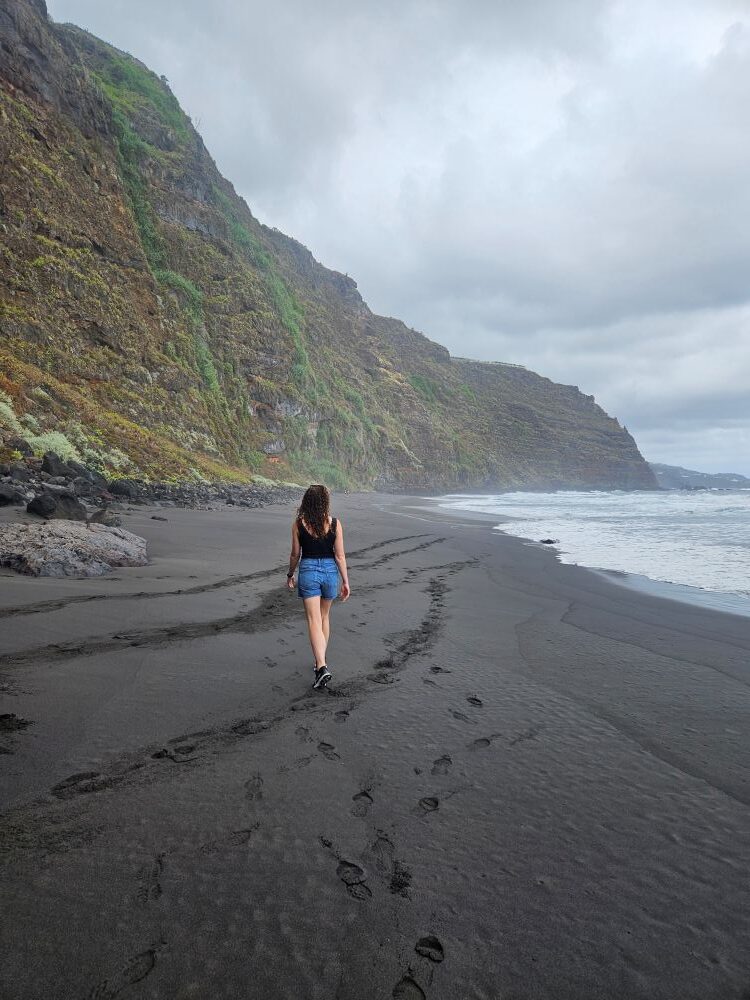
First on the itinerary was Playa de Nogales. If you want to do some walking in La Palma but don’t want to walk too far, this is an absolutely perfect one for you.
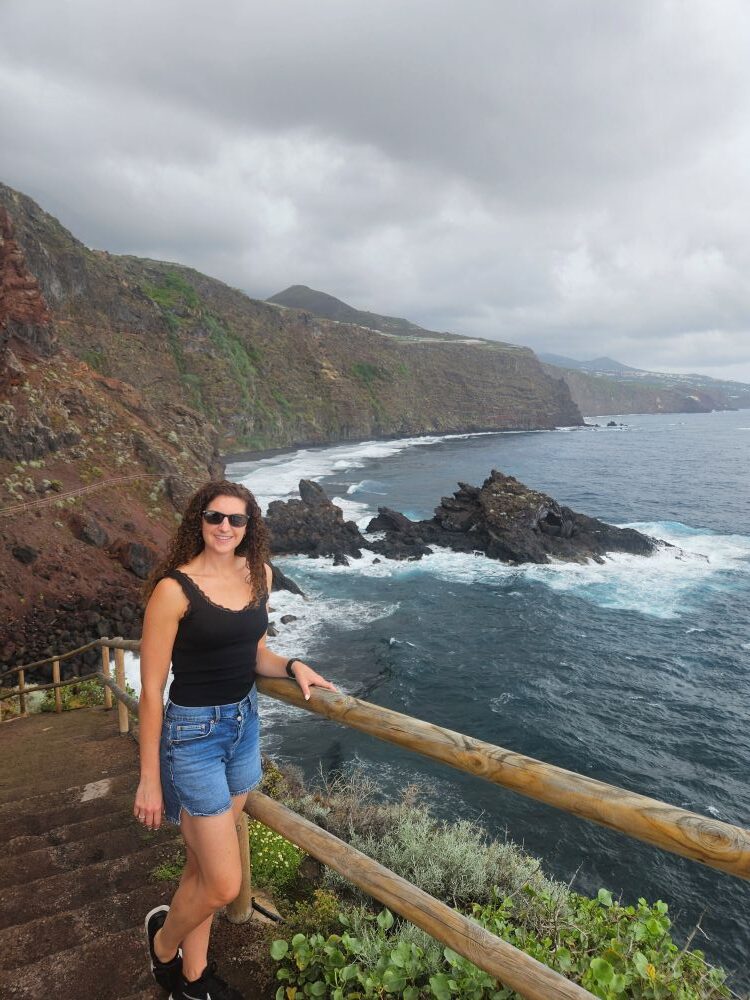
From the car park, the coastal path wraps around the cliffside, with gorgeous views across the ocean until you reach the black sand beach of Playa de Nogales. The trail is only 0.6km each way (1.2km total) and you can take your time with lots of photo stops along the way. Due to strong currents and a rocky shoreline, the beach is not a swimming beach, and more for experienced surfers and boarders, but it is still definitely worth visiting for the dramatic views.
Charco Azul & San Andrés
Just 30 minutes’ drive north along the coast from Playa Nogales, you’ll reach Charco Azul, in the region of San Andres. The main attraction at Charco Azul is the ocean pools, but before you take a dip, walk the ‘Camino del Cardal’ coastal path from Charco Azul to San Andres village. The walk is short and easy, but with beautiful ocean views. If you time it right, you can stop for lunch or a coffee in the quiet, pretty square in the village of San Andres before heading back to Charco Azul.
The Charco Azul natural ocean pools have been carved out of the rocks and are a must-visit if you are in this area of La Palma. Entry is free and there are changing facilities, toilets and a cafe.
Before you leave Charco Azul, you might want to pop into the Destilerías Aldea Rum distillery for a tour of the facilities and – if you’re not the designated driver – a little tasting!

Santa Cruz
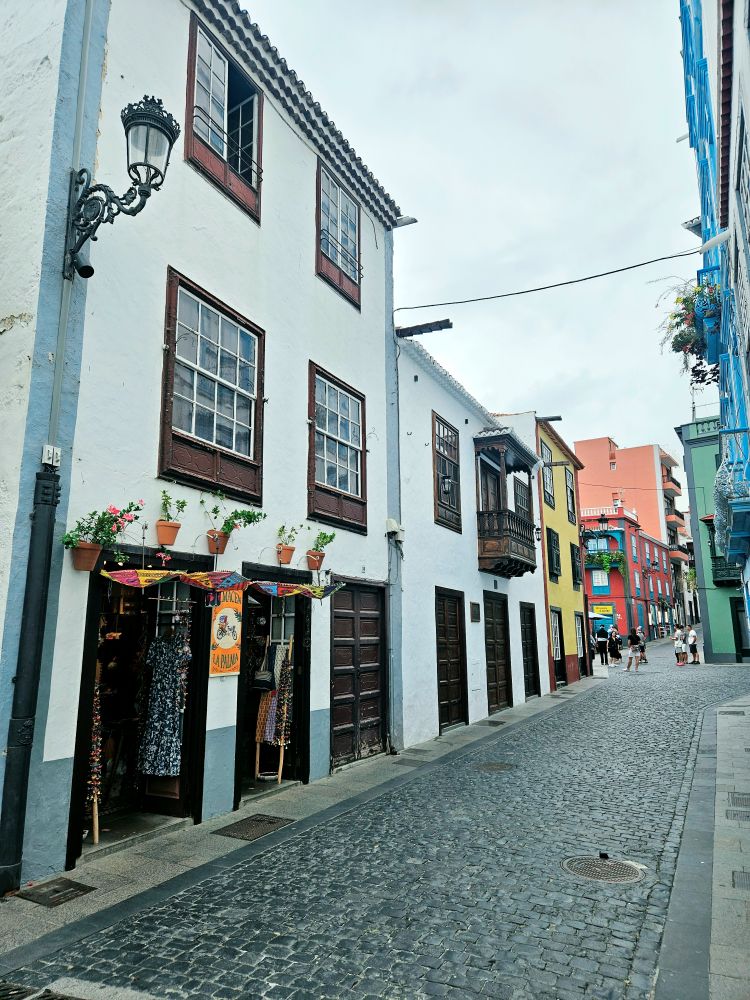
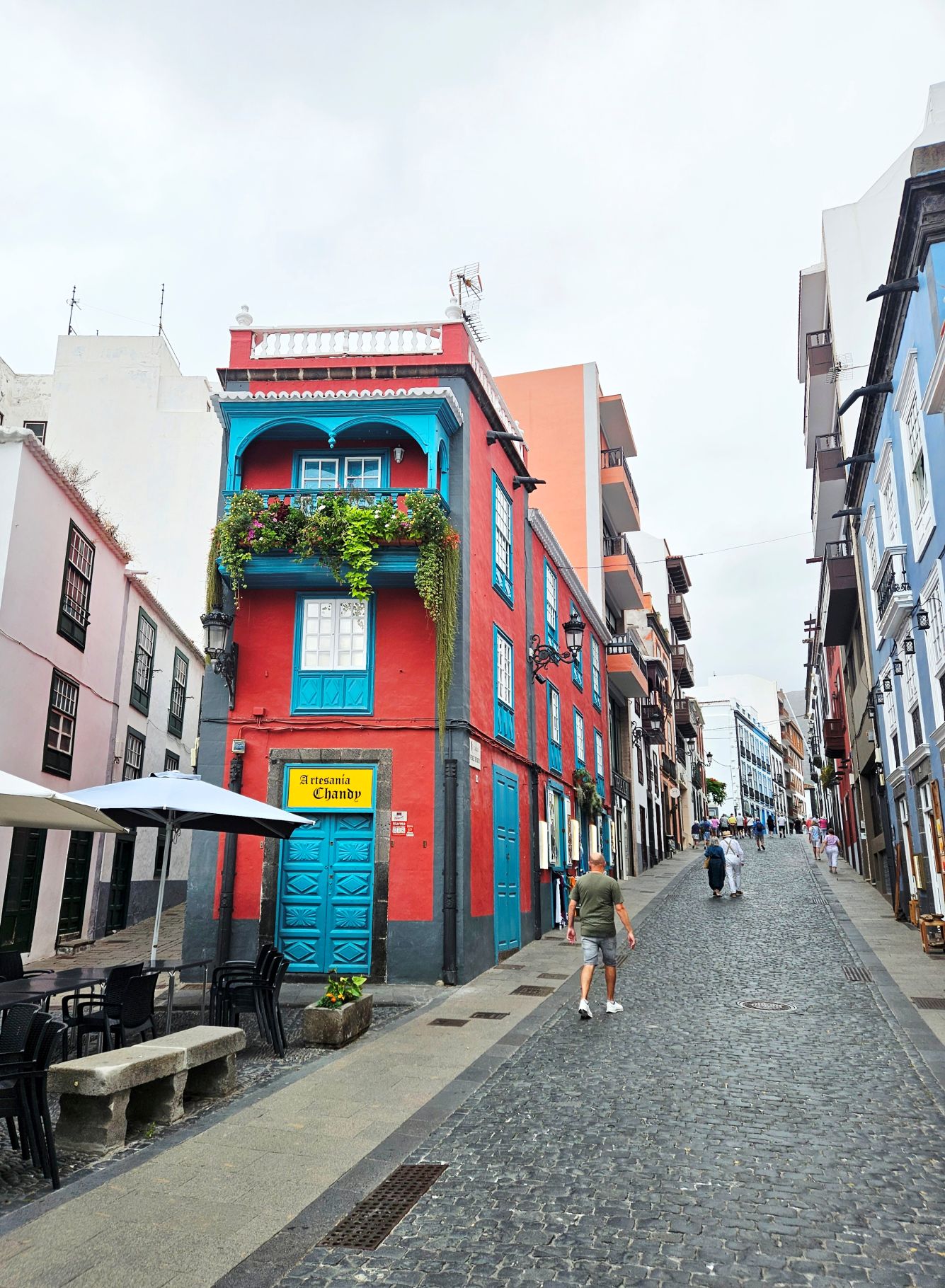
To finish the day, head back to Santa Cruz for a wander around the town. Note that Santa Cruz is a very traditionally Spanish town, so expect most shops to close between the hours of 2-5pm for their siesta and many restaurants don’t re-open after lunch until 7 or 8pm for dinner service.
One of the most photographed spots in Santa Cruz has to be the Balcones de la Avenida Marítima – a row of incredibly pretty 19th century houses with wooden balconies. Continue walking along the seafront to the Real Castillo de Santa Catalina and the Castillo de La Virgen. It’s a short steep walk up to Castillo de la Virgen but you will be rewarded with great views over the city and coastline. Access to the ramparts and grounds is open and freely accessible for you to explore.
Another attraction to visit in Santa Cruz is the Museo Naval – Barco de la Virgen. You can’t miss it – it’s a large, old wooden naval ship sitting next to the road! Inside the ship, you can learn a bit about La Palma’s naval history. Entrance is €4.50 and it is open every day 10am-6pm and closed on Sundays.
One of the best things to do in Santa Cruz is to explore the streets, admire the charming buildings and enjoy a leisurely drink or meal and watch the world go by.
Day 2
My second day in La Palma was a little more active and after enjoying a lovely al fresco breakfast at my hotel, I set off towards the mountains for a morning of hiking. There are so many hiking trails across La Palma but as I was only visiting for 3 days, and wanted to explore a mix of everything that the island had to offer, I decided that I only wanted to do a shorter hike, but it had to be impressive! So, after some research, I picked Pico de La Nieve and I was not disappointed!
Pico de La Nieve
Pico de La Nieve is a 7km out and back hike – 3km uphill to the peak then back again. Allow 2.5 – 3 hours for this hike, with photo stops. To hike Pico de La Nieve, you need to drive to the Incio Ruta parking area. (I use the term parking area loosely, as it is not a proper car park, but more like an area of ground alongside the road that is used as a parking area). When I arrived just after 9am, there was only one other car here, and the trail was pretty quiet for the whole of our hike.
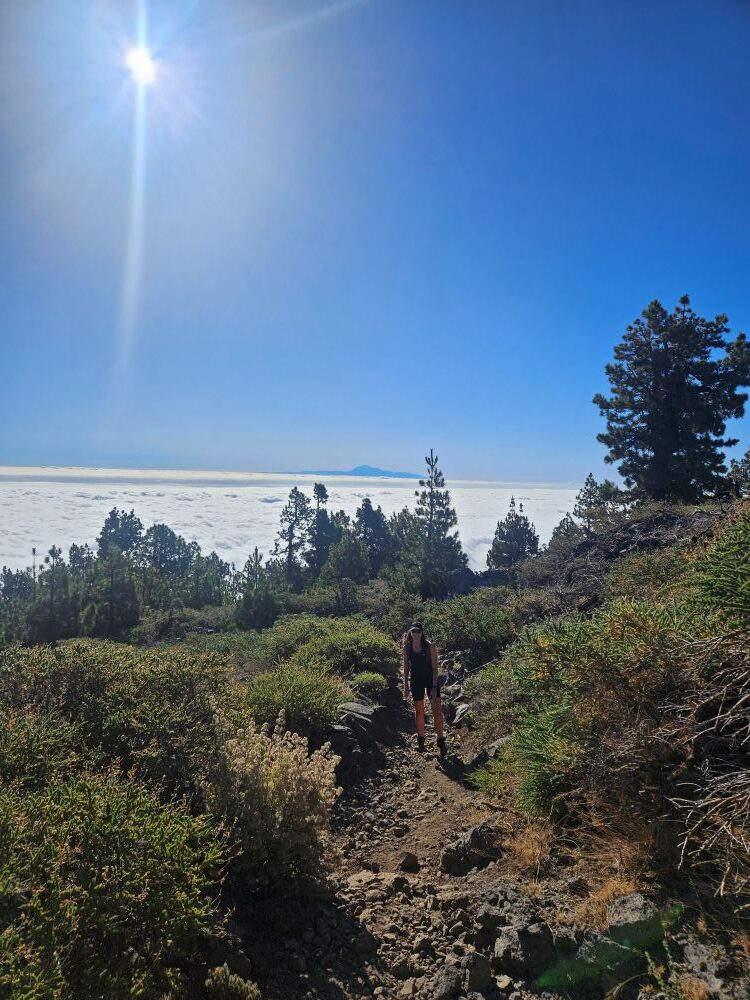
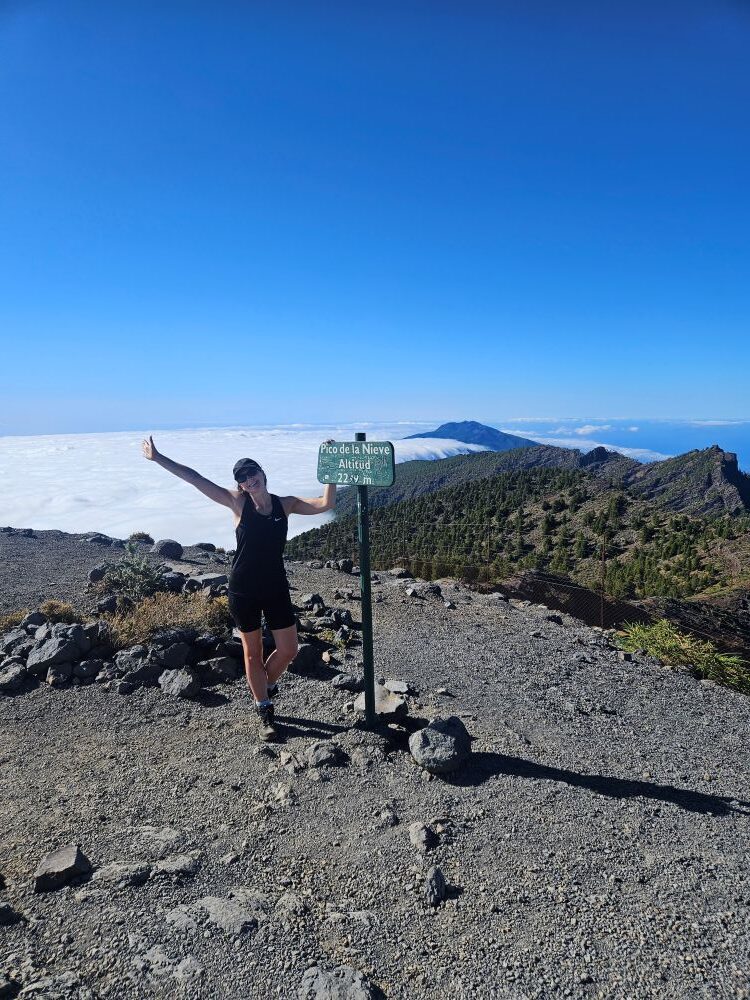
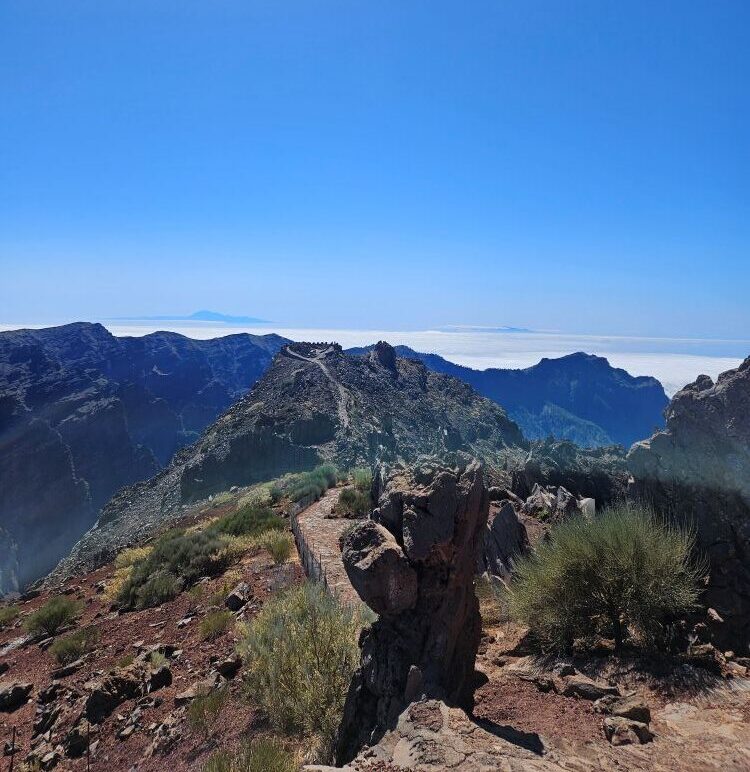
The first part of the hike takes you through a shady pine forest, but as you get higher, the trail is hot and exposed, so take plenty of water and a hat. Once you get above the tree line, and above the clouds, the views are incredible! It was a beautiful clear day when I was there, so I could see all the way across to the peak of El Teide in Tenerife as well as the top of the island of La Gomera. The peak of Pico de La Nieve sits at 2239m high and from here you can see across to the highest point in La Palma – Roques des Muchachos as well as the Caldera de Taburiente National Park below.
If you do one hike in La Palma, make it this one. For a short, moderate hike, the views are breathtaking!
The views hiking Pico de la Nieve were incredible!
Roques des Muchachos
Roques des Muchachos is the highest point on the whole of the island. From the parking lot at Pico de la Nieve, it is a 30 minute drive to the viewpoint. As you get close to the peak, you will see multiple giant telescopes, observatories and research instruments sitting on the side of the mountain. After driving through nature and pine forests, the sight of these huge structures was such a contrast! And for something unique to do in the evening in La Palma, you can join a stargazing tour at the Roque de Los Muchachos Astrophysical Observatory.
There is a tiny carpark at Roques des Muchachos viewpoint, accessed by a small track road from the main road, (which I didn’t love), but the rest of the roads are all good. Once at the viewpoint, you’ll be able to see across the Caldera de Taburiente National Park and on a clear day, across to El Teide on Tenerife and La Gomera.
After the viewpoint, stop off at the Roques des Muchachos visitor centre to learn about the astrological importance of La Palma.
Piscinas de la Fajana
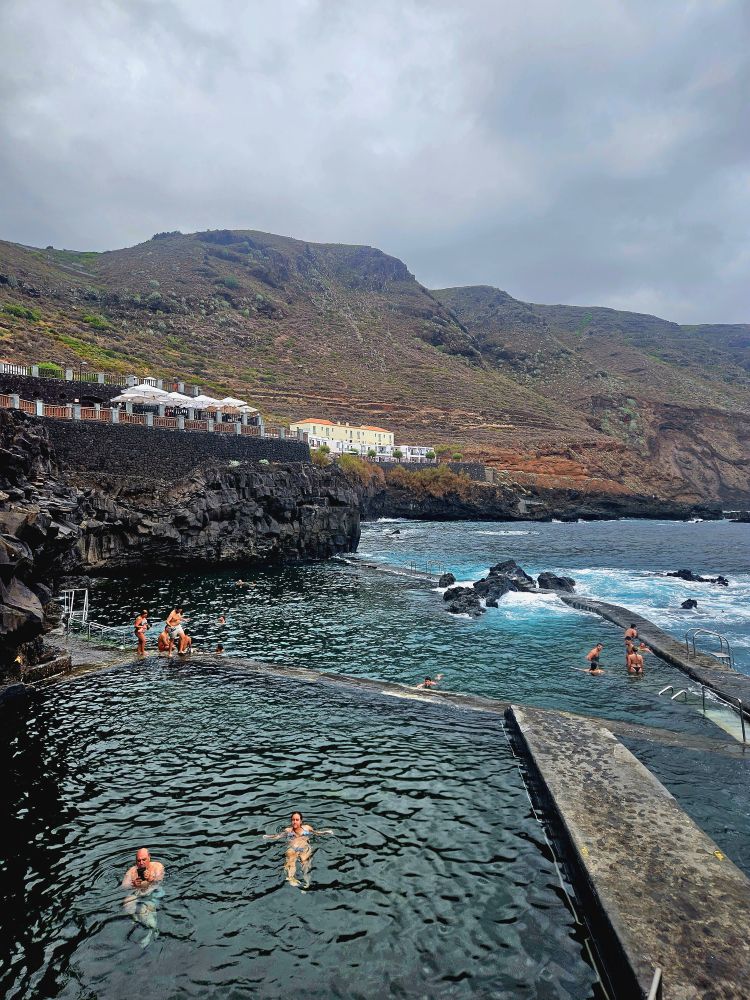
After an active morning and lots of driving on winding mountain roads, it’s time to relax for the rest of the afternoon! From Roques des Muchachos, it is a 1 hour 20 minute drive down the mountain to Piscinas de la Fajana, on the north coast of La Palma. Piscinas de la Fajana are man made rock pools, similar to Charco Azul. Personally, I preferred the Fajana pools as they were not only bigger but felt less busy and the setting felt more natural. There are restaurants, a kiosk and toilets with changing areas here as well as a large car park.
When I visited at the end of August, the water was cold, but in a nice, refreshing way and the view across the rocky coastline was beautiful.
Day 3
On my final day, I headed south and west of the island. The contrast in weather of this side of the island is quite distinct. It is much warmer and sunnier than the north and east coast. In fact, crossing through the mountain tunnel in the centre of the island from west to east felt like we had left one destination and arrived in a completely different one!
Volcán San Antonio
First stop of day 3 in La Palma, is the Volcán San Antonio visitor centre in Fuencaliente. The centre is open 7 days a week from 10am – 7pm and has a small exhibition with information on the volcanic activity in La Palma. You can also follow a short trail around the crater of the volcano, and see down to Volcán de Teneguía, another volcanic eruption which caused lava to flow into the sea and fossilise, extending the coastline and length of the island.
Puerto Tazacorte
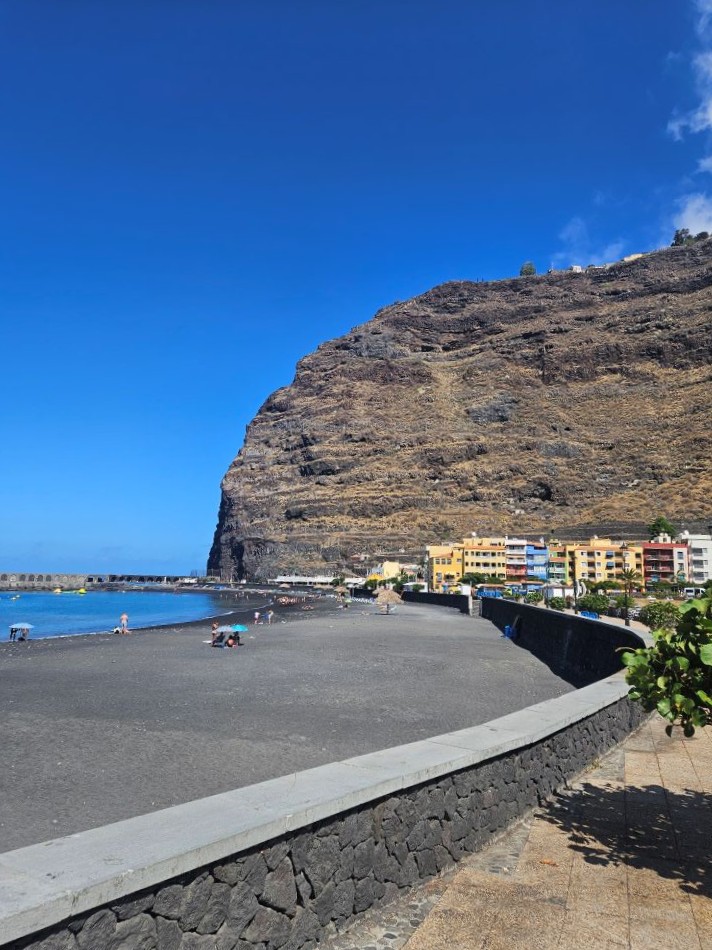
Leaving Fuencaliante, drive 40 minutes north to Puerto Tazacorte. This sunny coastal village is a popular place for swimming thanks to its calm waters and 1km stretch of black sand beach. From the small marina you can also join a whale and dolphin excursion. Around the marina are many bistros and seafood restaurants, so after relaxing on the beach, this is the perfect place for an al fresco lunch looking over the beach.
Positioned on the western side of La Palma, this village benefits from warmer temperatures and sunnier days, so if you are looking for a beach day in La Palma, this is a good option.
Los Llanos
Although Santa Cruz is the official capital of La Palma, Los Llanos is classed as the economic capital and is the most urban, with a large commercial centre. Los Llanos is busy and parking can be tricky, but if you venture just 10 minutes away from the central area, you should be able to find a space and you can easily walk in.
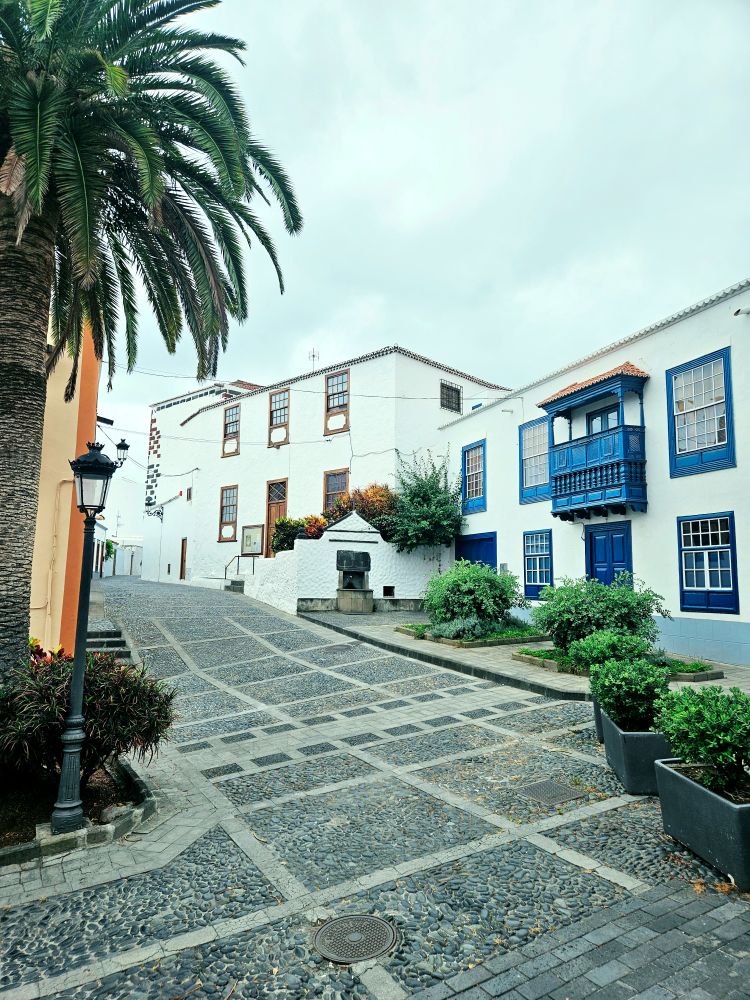
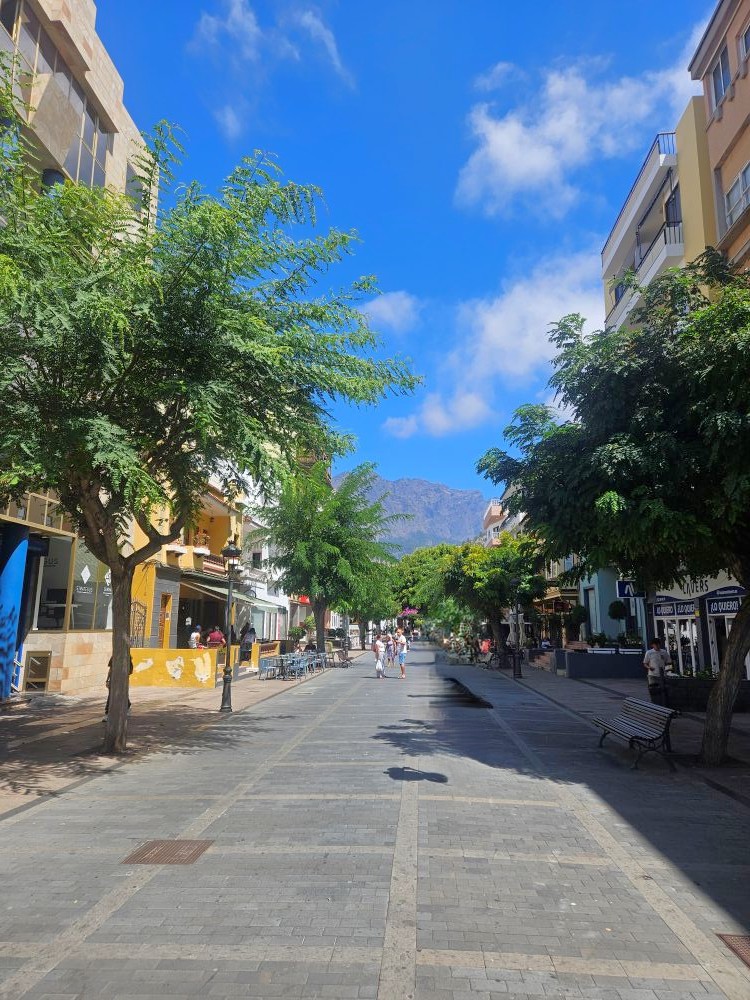
The centre of Los Llanos focuses around the pretty tree-lined Plaza de Espana and the Los Remedios church. Surrounding the plaza are several larger streets with shops, as well as some cafes and restaurants. Los Llanos also has a historic old town, with charming colourful houses, and smaller boutiques and independent shops. It is a nice place to wander around, especially if you want to do a bit of shopping.
If you are travelling to or from Los Llanos, make sure you take a quick pit stop at Mirador de Tajuya. This viewpoint is the most renowned spot for observing the result of the 2021 Tajogaite volcanic eruption. This is the most recent eruption that has taken place on the island, and at the time of the eruption, media were positioned at this viewpoint, reporting on the lava flow making its way downhill and towards the coast.
After spending the afternoon in Los Llanos, I sadly needed to head back to Santa Cruz to drop the rental car off and head to the airport for my evening flight back to Manchester. I wished that I could have spent some more time exploring, but this 3 day La Palma itinerary definitely gave me a good tour of some of the island’s highlights, and included a little bit of everything.
Other activities to do in La Palma
When I started researching what to do in La Palma, I added so many things to my initial wish list. Then I quickly realised there was no way I was going to be able to do it all in 3 days! But if you have longer in La Palma than 3 days, or you are looking for what else to do on La Isla Bonita, here are some more things to do which you may want to look into to add to your own La Palma itinerary:
Caldera de Taburiente National Park
This spectacular-looking national park sits in the centre of the island. One of the main attractions in the park is the Cascade of colours – a waterfall which has stained the rocks in the ravine bright green and orange. There are also several hiking trails within the park. Just be aware that some trailhead car parks must be reserved in advance due to limited space. You can find more information about the Caldera de Taburiente National Park on their official website.
Poris de Candelaria
This is a tiny fishing village, which has been built inside a 50m high cave, right next to the sea. According to research, the village dates back to the 17th century and was used as a shelter for local fishermen as well as a refuge during pirate attacks. From what I read, getting to this village is tricky and the drive down can be a little intimidating, so just be careful if you choose to drive in your own car. Also note that the village is in complete shade in the morning, so it is best to visit late afternoon or at sunset for the best views.
Ruta de Los volcanes
If you love hiking, this is definitely one to add to your list. This is one of the most popular routes on La Palma, taking you along the Cumbre Vieja ridge. However, it is only recommended for experienced and fit hikers and you must be prepared with the correct equipment, including plenty of water, as the trail is very exposed. The trail is 17km in length and takes about 6 hours. It is a point to point trail, so requires a bit of logistical planning with most hikers choosing to leave their car at the end of the trail, in Los Canarios, and take a taxi or bus to the start point, at Refugio de El Pilar.
As I didn’t have much time on the island, I decided to skip this one, which was a shame. For someone that loves hiking, this trail sounded like a great one, passing several craters, peaks and viewpoints.
Cubo de La Galga
Cuba de la Galga is a more accessible trail through the forest and is suitable for older children, so a good option if you are visiting La Palma as a family. This circular hike is around 12km long and takes 3-4 hours. I passed the car park for this trail several times as I was driving around and it was constantly busy, so I’d recommend getting there early if you want to do this hike.
Los Tilos Forest
Located in the north-east of the island, not far from Santa Cruz, the Los Tilos forest was one area that I originally had included within my 3 day La Palma itinerary, but unfortunately I ran out of time and didn’t want to rush and squeeze it in. However, if you like to move at a slightly faster pace, you can easily fit this into my day 1 or 2 itinerary whilst you are in that area of the island.
Within Los Tilos forest, there are several shorter hiking trails, one of which leads you to the Cascada De Los Tilos waterfall, then in the other direction, you can head uphill to the Espignon viewpoint for views over the forest. Again, this is a good option if you are travelling to La Palma as a family, or don’t want a very strenuous hike.

La Palma Travel Guide
Now you know some of the best things to see and do in La Palma, here’s a few handy tips and advice to help you plan your holiday to La Palma.
Where to stay in La Palma
Santa Cruz
Santa Cruz de La Palma is the capital city and main port. However, it definitely doesn’t feel very city-like. Santa Cruz is absolutely charming, with pedestrianised streets, colonial style buildings and an urban beach. There’s lots of bars, cafes, shops and restaurants and wandering around the town and along the seafront is a lovely way to spend an evening. It’s a great place to base yourself, especially if you want to have easy access to different areas of the island.
I stayed at Hotel Emblematico Holiday Time, which is a small hotel right on the seafront in Santa Cruz. It’s a lovely hotel, with a nice continental style breakfast which we enjoyed sitting outside in a quiet, pretty tree-lined square at the rear of the property. Despite being in the centre of town, it is not too close to any bars or restaurants, so it wasn’t noisy – in fact we could hear the waves lapping on the shore! If you prefer to stay somewhere smaller and more traditional, I would definitely recommend it. Check out Hotel Emblematico Holiday Time on the Jet2holidays website.
Los Canjeros
Los Canjeros is a small tourist resort, close to the airport and also Santa Cruz. This is where you will find larger hotel resorts with pools and activities. There is a beach here and also a handful of shops and restaurants. If you prefer a pool and want to stay in a more modern resort, then Los Canajeros could be a great option for you, with resorts such as the Hacienda San Jorge.
Tazacorte
Tazacorte sits on the opposite side of the island to the airport, Santa Cruz and Los Canjeros. This is the sunnier side of the island, so if you want to mix in a bit of sunbathing with your hiking and exploring, then this is the side of the island to stay. The main town of Tazacorte sits inland slightly, but it is only a 7 minute drive or 30 minute walk downhill to Playa de Tazacorte beach, where you’ll find several cafes and restaurants with sea views.
Fuencaliente
The area of Fuencaliante is located at the southern end of La Palma, and like Tazacorte, it is one of the sunnier areas of the island. Fuencaliente is home to La Palma’s famous salt flats, and thanks to its volcanic landscapes and warmer climate, it is well known for making high quality wines. The landscape here is really quite dramatic, with sweeping views out to the ocean.
How to get to La Palma
There is one small airport on the island that services all domestic and international flights to La Palma. If you are visiting another one of the Canary Islands, like Tenerife, you can also get a ferry across. One thing to be mindful of when flying back to the UK is that the airport is very small and does not have a lot of shops or restaurants, so you may want to ensure that you have some snacks with you – especially if you are travelling with kids! I flew from Manchester airport, which took just under 4 hours. Check out more Jet2 flights from Manchester here.
Getting around La Palma
Renting a car is the best way to get around La Palma. Be mindful that the mountain roads are winding so take care. Also pay attention to the road signs and don’t blindly trust your sat nav! We’ve all been there when your sat nav takes you down a road that resembles a garden path, so make sure you follow the road signs as they will usually take you on a more main road. If you are hiring a car, I would always recommend purchasing the full insurance, especially when driving on mountain roads and narrow streets.
If you don’t want to rent your own car, you can take the local buses to some places, or book an organised tour for certain sights.

Tips for visiting La Palma
Not everyone speaks English
If you are used to taking a holiday in Tenerife, Gran Canaria or more mainstream destinations in Spain, you will have noticed that lots of people speak English. However, most locals I spoke to in La Palma had no or very little English. I actually enjoyed being in a more traditionally Spanish destination with less English speakers. It was not a problem at all, just something to be aware of, and I’d recommend downloading the google translate app or similar as this really helped out on a couple of occasions.
Some places only accept cash
Whilst we paid on our card in most shops, bars and restaurants, there were a couple of places that only accepted cash, so make sure you check beforehand or have some cash on you.
Prepare for changeable weather
As a volcanic island, La Palma is very mountainous, with a large volcanic range running straight down the centre of the island. Because of this, the weather can be very different, depending on which side of the island you are on. You can go from slightly cloudy and even a bit rainy on the north and east side of the island to glorious sunshine in the south and west. The weather also depends on the elevation – if you are above the clouds, it might be much sunnier than under them. It can also be quite windy at the highest points on the island. I visited at the end of August and whilst the temperature was warm, around 26 degrees celsius, it did rain a little and there was heavy cloud coverage on the east side of the island. But once I got above the clouds and over on the west side, it was very warm and sunny.
Just make sure that you pack for all weathers, even in the summer months, I would recommend packing a light rain jacket and an umbrella for the occasional bit of rain.
Download an offline map
As a mountainous island, phone signal can be patchy, so I always download a copy of a google offline map to help me navigate whilst driving and on foot. If you are hiking, I would also download a copy of the route map – I use Alltrails, as it is easy to follow. Most trails on the island are well sign posted but it is good practice to have a map as well just in case.
Be safe whilst hiking
At the risk of sounding like one of your parents, if you’re planning on hiking whilst in La Palma, make sure you are prepared with proper equipment. Hiking boots are a must and be aware of sun and UV exposure. Even if it is cloudy at sea level, once you increase your elevation, especially if the trail takes you above the clouds, the sun is very strong. Some people have experienced heat stroke whilst hiking on some of the more exposed trails so bring enough water, a hat and clothing to protect you and set off early if you are hiking in the summer months.
Is La Palma worth visiting?
In one word. Yes! This was quite a last minute trip for me and I hadn’t been planning to visit La Palma, but I’m glad that I had the chance. I wasn’t sure what to expect of La Palma, but I really enjoyed it. That’s the great thing about last minute holidays – often you go somewhere with no expectations, just an open mind and the excitement of a shorter holiday countdown!
If you love being outdoors, hiking and a more laid back, traditional Spanish break, I think La Palma is definitely worth checking out.